Prison Puzzle: Brain Twist
- 4.6
- Rating
- 10.00M
- Installs
- Free
- Price

 Analysis by App-foxy
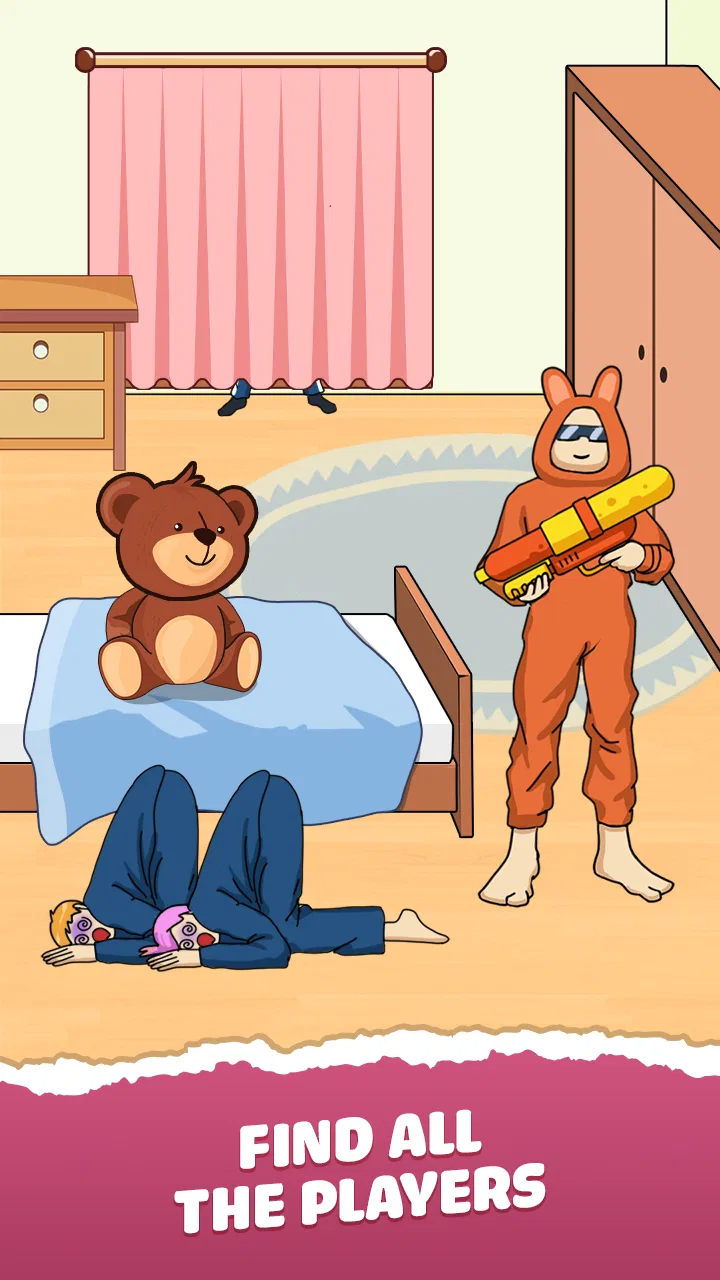
I approached Prison Puzzle: Brain Twist as a quick, mobile-first puzzle game rather than something meant to replace a long-form strategy title. Its central appeal is simple: you are placed in a prison-themed puzzle setting and asked to tap, observe, and work out what the situation is trying to hide. That sounds straightforward, but the best moments come from resisting the obvious answer and testing what the scene is really asking you to notice.
Developed by HIGAME LTD., this free puzzle game is aimed at players who enjoy short challenges built around attention, imagination, and a little trial and error. I found it easiest to appreciate when I treated each level as a small problem-solving exercise instead of rushing through it. The game is suitable for Everyone, runs on Android 7.0 or later, and its current version is 1.3.0. Those details make it accessible to a wide range of phones, although the experience still depends on whether you enjoy the particular style of tricky, tap-based puzzles it offers.
How to decide whether this puzzle game suits you
The first question is not whether the prison theme sounds interesting. It is whether you prefer puzzles that ask you to inspect a visual situation and experiment, or puzzles that give you a clear board, a fixed set of rules, and a logical route to the answer. Prison Puzzle: Brain Twist belongs much more to the first group. I would compare its appeal with visual riddle games and “find the solution” challenges rather than with traditional Sudoku, word puzzles, or match-three games.
You May Also Like

 Blood Strike: 2.5 Anniversary
Blood Strike’s Loadouts Turn Every Drop Into a Tactical Gamble
A close look at Blood Strike’s custom loadouts: how fast access to signature weapons reshapes its battle royale rhythm, rewards preparation, and narrows the gap between fights.

 Pandora - Music & Podcasts
Pandora’s Music Is Easy to Start, but Harder to Recover
Pandora’s strength is its low-effort path from a seed to a station. Its weak spot is how much confidence it asks you to place in connection, setup, and quiet recovery.

 8 Ball Pool
 Is Built on Rivalries, Rematches, and Routine
A close look at the rivalries, rematches, shared routines, and unanswered safety questions that turn a quick pool match into a persistent mobile community.

 Samsung Music
’s Quiet Strength Is Playing What You Already Own
Its reach comes less from spectacle than from dependable access to a personal library. That simplicity is both the app’s strongest retention engine and its ceiling.

 AccuWeather: Weather Radar
AccuWeather Review: A Quick, Clear Forecast for Everyday Decisions
For everyday plans, the best forecast is the one you can understand quickly. AccuWeather makes rain timing, radar, and local conditions easy to act on, with a few trade-offs.

 Hill Climb Racing
Why Hill Climb Racing Still Turns Crashes Into One More Run
A tiny car, a bumpy hill and one more upgrade: Hill Climb Racing keeps resurfacing because its simple chaos makes every near-miss feel personal.
More From Our News Desk



That distinction matters because the feeling of progress is different. In a conventional logic puzzle, I usually know what kind of reasoning is expected. Here, I may need to question the wording, look for an unusual object, or try a tap that would not be my first instinct. The satisfaction comes from noticing the intended twist. If you like being surprised by a level, that design can be refreshing. If you prefer complete consistency and transparent rules, it can occasionally feel less fair.
I also considered how well the game fits ordinary routines. This is the kind of title I would open while waiting for a coffee, taking a short break, or winding down before bed. It does not demand the same commitment as a large adventure game, and its premise is easy to understand without studying a long tutorial. That makes it a practical choice for short sessions, especially when I want something interactive rather than passive scrolling.
On the other hand, I would not choose it as my main puzzle game if I wanted deep planning, a large strategic system, or a steadily increasing mathematical challenge. The prison setting gives the puzzles a recognizable identity, but it does not automatically turn them into a complex simulation. The right expectation is a collection of compact brain teasers with a playful twist, not a detailed prison-management experience.
What I look for while playing
My main decision criteria were clarity, variety, tolerance for experimentation, and how well the game handles a wrong answer. A good level should give me enough information to form a theory, while still leaving room for a clever observation. It should also make failure feel like part of the process rather than a reason to stop. In this style of game, the interface is important because a puzzle can become frustrating if I cannot tell what parts of the screen are interactive.
A useful habit is to inspect the entire scene before tapping repeatedly. I look at the background, characters, objects, and any unusual placement. I also reread the prompt mentally and ask whether it is describing the goal directly or trying to push me toward a misleading assumption. That approach saves time and makes the game feel more like observation than random guessing.
Another practical criterion is whether the game works for different attention spans. Someone who wants a five-minute distraction needs a different experience from someone planning a long evening session. Prison Puzzle: Brain Twist fits the first use case particularly well. I can play a little, stop, and return later without needing to remember a complicated build, inventory, or storyline.
The game has attracted a 4.6 average from around 11 thousand ratings and has passed 10 million installs, which suggests that its accessible puzzle format has found a broad audience. I do not treat popularity as proof that every level will suit me, but it is useful context: this is not an obscure experiment aimed only at dedicated puzzle specialists. It is designed to be approachable, quick to understand, and easy to pick up.
Where Prison Puzzle: Brain Twist wins
The strongest part of the experience is the way it turns a simple tap into a question about intention. I often begin a level thinking I understand the task, then notice that the obvious action is not quite enough. That small shift—from “what should I tap?” to “what assumption am I making?”—is the core of the game’s personality.
The prison theme also helps the puzzles feel connected rather than completely random. A locked environment naturally suggests secrets, escape ideas, suspicious objects, and characters with something to hide. Even when the individual challenge is small, the setting gives my imagination somewhere to go. I found that more memorable than a collection of unrelated abstract screens.
One of the game’s practical strengths is its low barrier to entry. I do not need prior knowledge of puzzle terminology, a long explanation of controls, or a particular gaming background. The basic interaction is familiar to anyone who uses a touchscreen. That makes it suitable for casual players and for families looking for a simple game that does not require complicated controls.
The short-session design is another clear advantage. I can use it as a reset between tasks: play until I solve a challenge, put the phone down, and continue with my day. This is different from games that encourage me to remain engaged through long rounds or resource cycles. For me, that makes it easier to control my play time.
I also like that the game rewards curiosity more than speed. There is little reason to tap as quickly as possible. A slower scan of the scene can be more valuable than frantic interaction. That gives it a different rhythm from reflex games and makes it a reasonable choice when I want to exercise attention without feeling rushed.
Three habits that improve the experience
First, I now separate observation from action. Before touching anything, I check the whole screen for details that look deliberately placed. This is more effective than immediately tapping the most prominent object, because visual puzzle games often use prominence as a distraction.
Second, I treat an unsuccessful attempt as information. If an action does not work, I ask what it tells me about the level rather than repeating it without thought. Perhaps the target is not the object I assumed, or perhaps the order matters. This mindset reduces frustration and turns trial and error into a structured process.
Third, I avoid using help too early when I am stuck. I give myself a short period to change perspective: reread the task, inspect the edges of the scene, and consider whether the answer depends on an indirect interaction. That pause is important because the intended solution may be hidden by my first interpretation rather than by a genuinely difficult rule.
These habits are not just generic puzzle advice in this case. They match the game’s specific appeal: its challenges depend on noticing what the screen is encouraging me to overlook. Players who enjoy that kind of mental reversal will probably get more from it than players who simply want to clear levels as quickly as possible.
Where the free model fits into the decision
The game is free to download, with optional in-app purchases ranging from $0.99 to $9.99 per item. That makes it easy to try without committing money at the start. I would begin with the free experience and decide later whether any optional purchase genuinely improves my enjoyment. For a casual puzzle title, that is the sensible order: first determine whether the level style suits you, then think about spending.
There is a trade-off, though. Free mobile games can make some players more conscious of interruptions or purchase prompts than they would be in a paid puzzle app. If you strongly prefer paying once for a clean, uninterrupted experience, a premium alternative may feel more comfortable even if its puzzles are less playful. I would not choose this game solely because it costs nothing; I would choose it because its format matches the way I want to play.
The Everyone rating is also relevant for households. The presentation is positioned for broad accessibility, so it is easier to recommend as a general puzzle option than a game built around mature themes or complicated competitive systems. Parents should still make their own decision about purchases and screen time, but the age category makes the game a more natural fit for shared casual use.
Where other puzzle categories may fit better
Prison Puzzle: Brain Twist is not automatically the best choice for every puzzle fan. If I want a calm, repeatable routine, a Sudoku or crossword app is likely better. Those formats give me established rules and a clearer sense of difficulty. They reward systematic solving rather than surprise, so they are preferable when I want to focus on numbers, vocabulary, or a familiar daily habit.
If I want an elaborate story, I would look toward a narrative adventure or an escape-room game with more sustained exploration. The prison theme may make me curious, but this is still a compact puzzle experience. Someone expecting character development, a large world, or a detailed escape plan could feel that the setting is more of a frame than a fully developed simulation.
Match-three and arcade puzzle games are also better for players who want constant motion. Those alternatives usually make the next action obvious and emphasize speed, combos, or score chasing. This game asks me to pause and interpret. That is its strength when I am in a reflective mood, but it may feel slow to someone who wants immediate feedback from every tap.
For competitive players, a leaderboard-driven puzzle game may be a stronger fit. Prison Puzzle: Brain Twist is more personal: I am trying to understand the trick in front of me, not prove that I can solve it faster than someone else. That makes it less stressful, but it also means it may not provide the long-term motivation that rankings, timed events, or multiplayer challenges can create.
There is also a difference between “tricky” and “deep.” A trick can produce a satisfying surprise, but it does not always offer a large number of meaningful decisions. If I am looking for chess-like planning or a puzzle system I can study for weeks, I should choose a more structured strategy title. This game is better when I want frequent small discoveries.
Who should skip it
I would skip this game if I dislike solutions that depend on questioning the obvious interpretation. Players who become annoyed when a level feels like it expects a particular thought process may prefer rule-based puzzles with unambiguous logic. I would also skip it if I need an offline routine, a clearly documented progression system, or a single-purchase experience; those priorities point toward different types of apps.
It may not be ideal for someone who wants to play for hours without repetition. Short puzzle formats can be enjoyable in bursts, but their appeal depends on the quality and variety of individual challenges. I would approach it as a game to sample in manageable sessions rather than assume it will replace every other puzzle on my phone.
Finally, players who want a serious depiction of prison life should look elsewhere. The theme is used to create a playful setting for brain teasers, not to offer a realistic social or management simulation. Understanding that distinction prevents disappointment and makes the game’s lighter approach easier to enjoy.
The real cost of switching from another puzzle game
Switching to this game is easy in terms of controls. I do not have to learn a complicated interface, and the tap-based format becomes familiar quickly. The bigger adjustment is mental. If I am coming from Sudoku, I need to stop expecting every answer to follow a fixed grid logic. If I am coming from match-three games, I need to slow down instead of searching for the fastest move.
There is also a cost in consistency. A traditional puzzle app can become part of a predictable routine: one daily crossword, one Sudoku, or a set number of board challenges. This game is less about maintaining a ritual and more about enjoying a sequence of surprises. That is valuable when I want variety, but less useful when I want a dependable daily benchmark.
The financial switch is relatively gentle because the game is free to start. Still, I would keep optional purchases in mind and avoid treating them as a solution to every difficult level. The best reason to continue should be that I enjoy the puzzles, not that I have already spent money. Setting that boundary makes the free-to-play structure easier to manage.
My recommended workflow is to install it when I have a short break, play without rushing, and judge it after several different challenges rather than after the opening impression. I would also keep a second puzzle category available. When I want a quiet, rule-driven session, I can use Sudoku or crosswords; when I want a visual twist and a prison-themed scenario, this is the better choice.
That combination works because the games serve different moods. I do not need Prison Puzzle: Brain Twist to provide endless depth if I use it for what it does well. The mistake would be comparing it with every puzzle game as though they were competing for exactly the same purpose.
My recommendation for everyday players
I recommend Prison Puzzle: Brain Twist to casual players who enjoy visual riddles, unexpected solutions, and short touchscreen sessions. It is especially suitable for someone who wants a free game that can be understood quickly but still asks for more than simple reflexes. The prison setting gives the challenges a recognizable flavor, while the tap-based interaction keeps the entry barrier low.
I would recommend it with a qualification: approach it as a collection of playful brain twists, not as a deep strategy game or a realistic prison adventure. Take time to inspect each scene, question the wording, and accept that a failed attempt may be part of discovering the intended idea. Those habits make the experience more rewarding and reduce the temptation to tap randomly.
Its broad age rating, support for older Android devices, and strong reception make it an easy title to try. The developer is HIGAME LTD., and the game’s reach—more than 10 million installs—shows that its accessible format has connected with many mobile players. I still would not let those figures make the decision for you. The important question is whether you enjoy puzzles built around perception and misdirection.
For me, the clearest verdict is this: choose it when you want a quick, imaginative challenge that can interrupt a dull moment without demanding a long commitment. Choose a Sudoku, crossword, strategy, or narrative escape game instead when you want a more fixed rule set, deeper planning, or a stronger sense of story. Its best use is as a flexible visual puzzle break, not as an all-purpose replacement for every game in the category.
Because it is free to begin, there is little reason not to test that fit for yourself. Give the levels your full attention instead of treating them like a tapping contest. If the moment of spotting the hidden idea makes you smile, this game has probably earned a place on your phone. If the intended trick feels more irritating than satisfying, switching to a more transparent puzzle format will be the better decision.
FAQs for Prison Puzzle: Brain Twist
01What is the main objective of Prison Puzzle: Brain Twist?
Prison Puzzle: Brain Twist challenges players to solve intricate puzzles to escape from various themed prison cells. Each level presents a new environment with unique obstacles and brain teasers. The goal is to use logic and problem-solving skills to unlock doors, find hidden objects, and piece together clues to achieve freedom.
02Are there any in-app purchases or ads in Prison Puzzle: Brain Twist?
Yes, Prison Puzzle: Brain Twist offers in-app purchases to enhance the gameplay experience. Players can purchase hints or unlock additional levels if they find themselves stuck. The game also contains ads, but they can be removed with a one-time purchase. This ensures uninterrupted gameplay for dedicated players.
03Is Prison Puzzle: Brain Twist suitable for all ages?
Prison Puzzle: Brain Twist is designed for players aged 12 and above, given its complex puzzles and problem-solving requirements. While the game is not graphically violent, the themes of imprisonment and escape might not be suitable for younger audiences. Parents should assess its appropriateness based on their children's maturity.
04Does Prison Puzzle: Brain Twist require an internet connection to play?
Prison Puzzle: Brain Twist can be enjoyed offline, allowing players to solve puzzles without an internet connection. However, certain features like in-app purchases and leaderboard updates require connectivity. Playing offline ensures you can enjoy the game during travel or in areas with limited internet access.
05How does the hint system work in Prison Puzzle: Brain Twist?
The hint system in Prison Puzzle: Brain Twist provides players with helpful nudges when they are stuck on a challenging puzzle. Players can earn hints by completing levels or purchase them through in-app purchases. The system aims to enhance the gaming experience by providing just enough guidance without spoiling the solution entirely.
Pros
- Engaging brain-teasing puzzles
- Colorful and intuitive interface
- Regular updates with new levels
- Challenging but rewarding gameplay
- Offline play available
Cons
- Contains in-app purchases
- Ads can be intrusive
- Limited free hints
- Some puzzles feel repetitive
- Requires frequent updates

Prison Puzzle: Brain Twist
Gallery